- Mindset
Rewriting Your Narrative: How Changing Your Internal Story Can Transform Your Life
Human beings are storytellers. The power of our ability to tell stories has helped us rule the planet. It enables us to connect and form large groups to conquer dangerous species. There are two types of stories we tell. One to the outside world — public stories — and the other that we tell to ourselves — private stories.
Each one of us walks with the story of our lives in our heads. Most times we are not aware of the stories our mind tells us and the impact it has on our lives. Our brain’s main goal is to keep us safe. So it narrates the story from our point of view, emphasising, minimising or eliminating the things to rationalise our story.
It reminds me of the characters of the epic Mahabharata, where each character has a plausible story on why they were right. This is because we take a moral stand through the story we tell. Stories are important as we make sense of our lives and the world through them.
Many of our stories are about feeling trapped. We feel imprisoned by our families, our jobs, our relationships or our pasts. The stories are misleading incomplete or just wrong. Some of the most common stories that our inner critic narrates are “I am not good enough”, “I am unlovable”, “everyone’s life is better than mine”, “The future is bleak” or “I am an impostor”.
I do a lot of mediation work with couples. Amazingly, everyone tells their story depending upon their viewpoint and casting themselves as a hero and their partner as a villain.
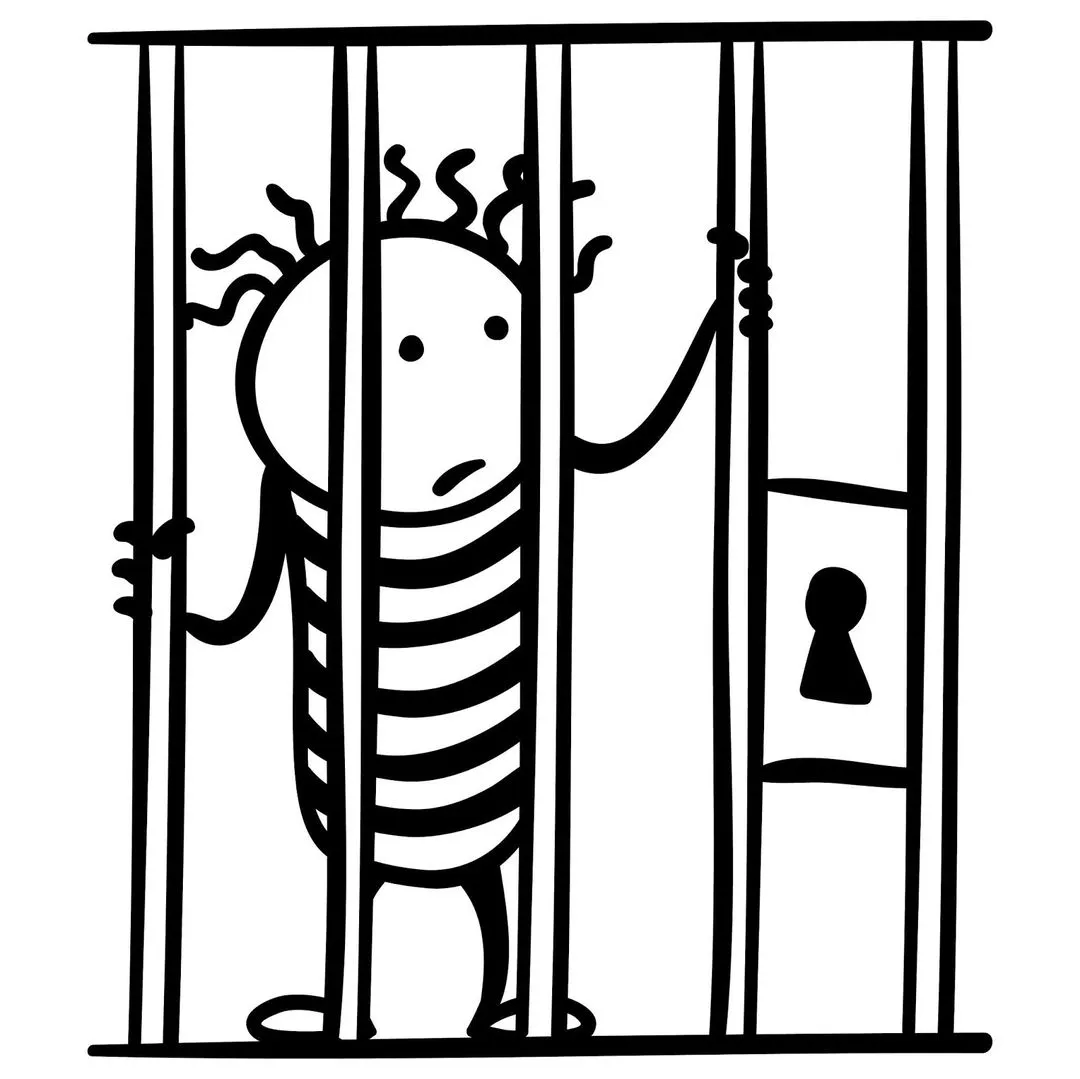
The cartoon shows a prisoner shaking the bars, desperately trying to get out. But on the right and the left, it’s open. It is the same with us. We feel completely trapped in our emotional jail cells. We have the power to change and become free.
Then why most people are not able to change? Because freedom comes with a responsibility — taking 100% responsibility for your life. No blaming or shaming stories. It starts with “I want to change….”
Our brain is designed to optimise the energy. Change even if is a positive one is an effortful task and hence our brain resists it. We have to use our limited willpower to rewrite our story. Hence our brain loves familiarity even though it is unpleasant or miserable compared to writing a new story.
With the familiar story, we know the characters, plot and even the recurring dialogue. We know the scene and how it will be enacted and the dialogue that the other person will have. It is comfortable for the brain but not for you.
The brain creates another illusion that it wants to make the change. It creates another story that wants other characters to make changes. We have no power on anyone so we continue to churn the sobbing and victim stories. In the process, we feel disempowered and more frustrated.
The people who are depressed or feel lonely or hurt or rejected are not the best people to talk about their stories in that state. This state of mind depression distorts our stories, colours them negatively and narrows our perspectives. We effectively become our fake news broadcasters and keep generating distorted stories.
Unfortunately, our mind makes us believe 100% in these stories and keeps us in a depressed state and a person finds it extremely difficult to edit the stories.
Stories are powerful; they can put us down and make us feel trapped or inspire us to achieve great things. We can view failure as a catastrophe or as an opportunity depending upon the story.
Human beings are the only species that have the power to rewire the brain. We have the power to change our stories and then we can change our lives.
How to Edit the story?
1. Observe the stories your mind is telling you about a situation, a person in your life or about yourself. If you feel miserable and stopping you from leading a rich and meaningful life then you use your power to edit and rewrite your story.
2. Take a piece of paper and write down the story your mind is telling you. Observe the support characters. Write down who are the people who are helping you to uphold your story. When we tell the sobbing story to our friends, they show what is called “idiot compassion”. They say “You’re right, that’s so unfair,”. It does not solve the problem and it further reinforces the story in our mind. So stop narrating the story to those people when you are in the process of editing the story.
3. Get out of the first-person narration. Write the story from another character’s perspective. It will make you think from the other person’s perspective. The character becomes much more sympathetic, and the plot opens up. That’s the hardest step in the editing process, but it’s also where change begins.
Replacing the story is a slow and laborious process and takes anything from thirty days to six months. Each day spend a few minutes examining one story and write an empowering version of the same story. Then read it out loud two times a day. The brain will replace the story with the newly edited version. Usually, depending on the intensity of the story it may take from a few weeks to 6 months. It is a great feeling to have control of your life. True happiness is knowing that you are free. You are not in your emotional jail cell. Take charge of your life by replacing the disempowering stories with the empowering story.
Motivation to change the story
We are here for a short time. Always remember that eventually a story will be written for all of us. It is called an Obituary. If we become aware that we are the author and have the power to change the stories, we get to be the hero of the story rather than the victim.
This is hugely motivating to seize control of your life and change the narrative of your story.
We need to change the stories to change our lives. Go and write your masterpiece and become the best version of yourself.
Enjoyed This Story?
Let’s explore how mindfulness and connection can transform your own daily moments.